
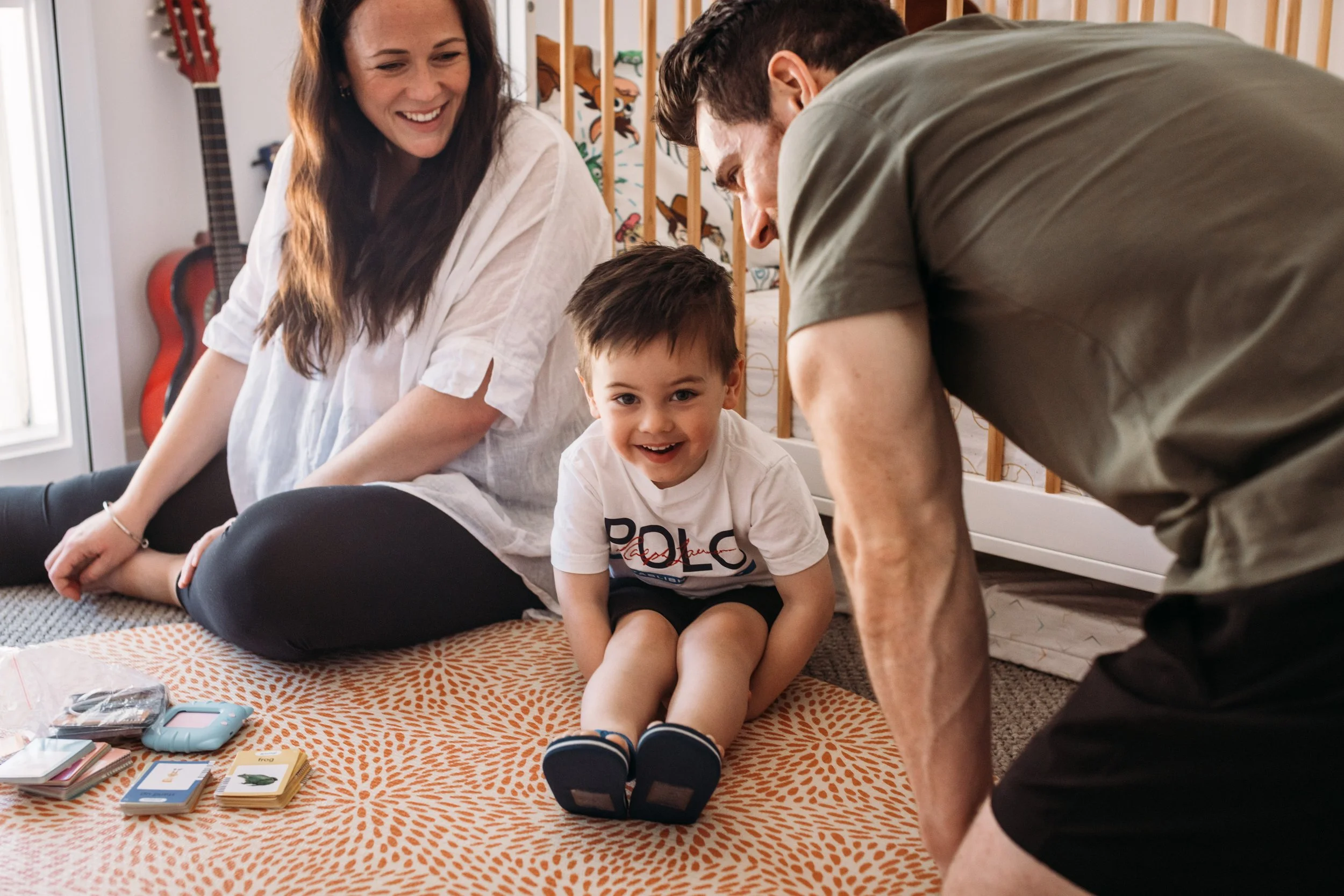
I think when parents of kids with ADHD consider booking a family photoshoot, there's often a fair bit of worry involved. Will the photographer understand ADHD? Will they know what to do? Will they think my child is being difficult? And, after spending all that money, are we actually going to get any decent photographs?
They're all completely legit concerns. Parents don't always know the photographer, and even if that photographer understands ADHD, they don't necessarily know THEIR child. I think there can also be some lingering judgement around ADHD behaviours being mistaken for bad behaviour. It's something families have been dealing with for years, and we're still undoing a fair bit of society's bullshit around that.
There's also this assumption that photographing kids with ADHD is going to be difficult because they won't sit still, follow instructions or maintain their attention long enough to get a photograph. But ADHD isn't always about endless energy, and even when it is, that doesn't mean photography suddenly becomes impossible. I've photographed plenty of ADHD kids who love having a goal, enjoy engaging in an activity together and will happily pose for a photograph.
This is where documentary photography can work particularly well. Rather than controlling the scene or directing everyone through a series of poses, the focus is on observing how a family interacts within their own environment. There's a lot more freedom to follow the child's interests, energy and attention, wherever they happen to go.
ADHD doesn't always mean bouncing off the walls
There's still a fairly common assumption that ADHD means a child who's constantly moving, easily distracted and unable to sit still. And sometimes that's absolutely the case. But ADHD can look very different from one child to the next.
According to the Australian ADHD Clinical Practice Guideline, ADHD is a neurodevelopmental condition involving differences in attention, hyperactivity and impulsivity, with executive functioning also commonly affected. There are three recognised presentations: predominantly inattentive, predominantly hyperactive-impulsive and combined. And even within those categories, there's enormous variation in how ADHD shows up in everyday life.
I've photographed kids who appear incredibly quiet, but then come out with an observation that makes me wonder what on earth has been happening inside that brain. Others jump between conversations, activities and ideas at a remarkable pace. Some are constantly moving until something catches their interest and suddenly they're completely absorbed. Good luck convincing them to move on from that!
Something else I've noticed is how quickly things can change. A child might appear perfectly comfortable and engaged, then suddenly become overwhelmed. Others can be incredibly aware of what I'm doing, where I'm standing and why I'm pointing a camera at something, complete with approximately four hundred questions about the entire process. None of these things are problems, but they can influence how a photoshoot unfolds.
And here's something I wish more photographers understood: ADHD is freaking cool. It's not something to be afraid of or an insurmountable mountain to overcome. There's so much fun to be had going on an adventure with an ADHD brain, particularly when you're willing to surrender your own expectations and see where the child takes you.
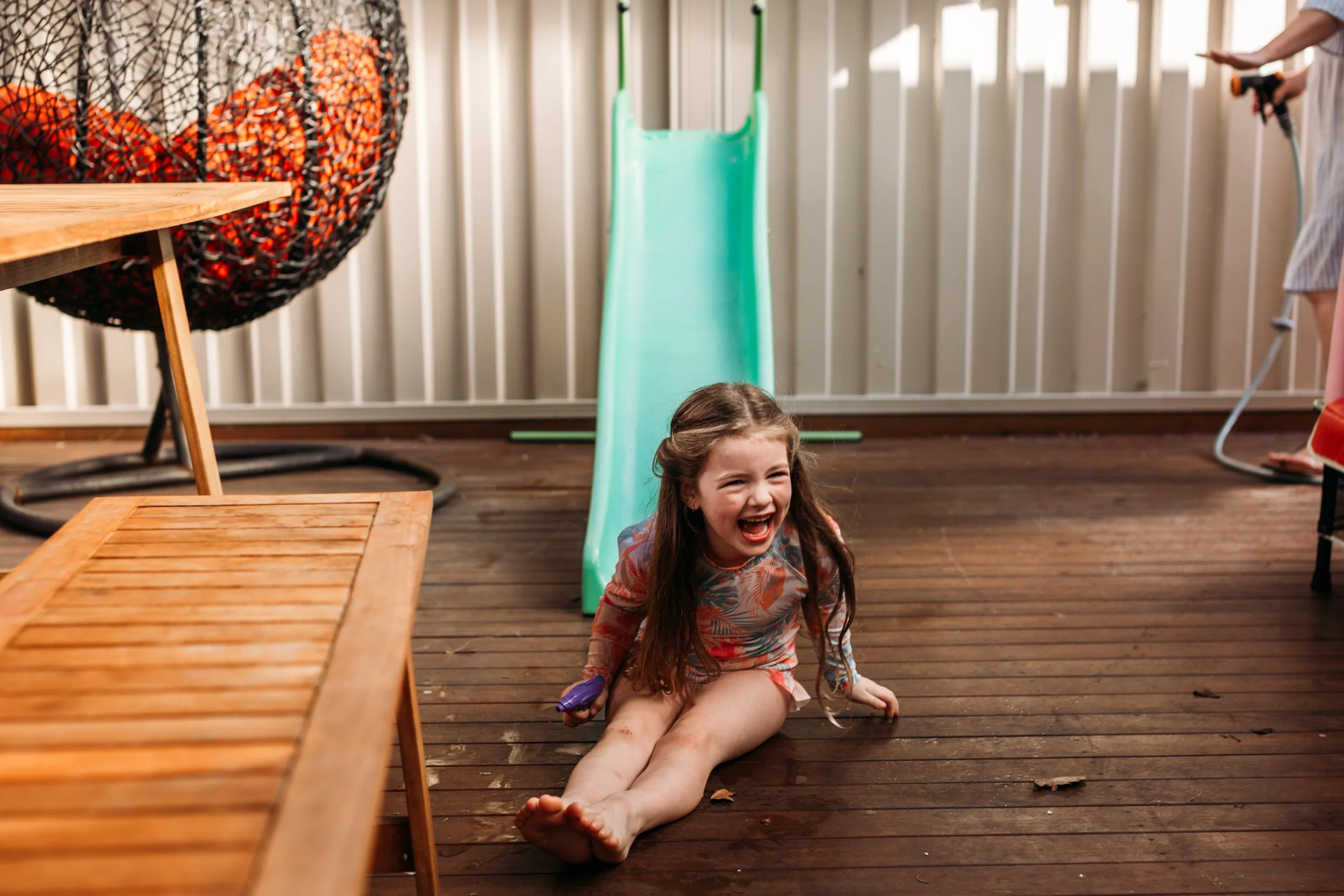
Five things I've learnt photographing kids with ADHD
1. Choose activities with possibilities, not expectations
If I need to think of activities for a photoshoot, I look for things that offer the potential for collaboration or joint attention. Something that can be set up almost anywhere, that allows people to join in, and importantly, something that can be abandoned without distress.
That last bit is important.
If an activity only works when everyone stays involved for twenty minutes and follows a particular sequence, it might not be the best choice. Something more flexible gives children the opportunity to engage on their own terms, change direction or move on without anyone feeling that the activity has failed.
The point isn't necessarily to finish what you started. It's to create opportunities for interaction along the way.
2. Fuck off with the instructions
Well, perhaps not literally. But I reckon there's a lot to be said for putting the instructions away when photographing kids with ADHD.
Rather than telling children where to stand, what to do next or how they should participate, I've found it far more useful to evolve and guide things through conversation, example or suggestion.
Some ADHD kids want to know the bigger picture. Doling out instructions one step at a time without explaining where you're heading can be incredibly frustrating and slowwwww. And let's face it, following instructions isn't particularly exciting when you've already spent half your life doing it at school or being reminded to do chores.
Let them find the point of the shoot. Don't force them to follow you.
Sometimes that means demonstrating something rather than explaining it. Sometimes it's making a suggestion and seeing whether they're interested. Sometimes it's narrating what I'm doing, engaging them in the process and allowing them to become part of making the photographs.
And if you've got an excited ADHD kid who wants to play with you, then play. Run, climb, explore and get involved. There's no reason the photographer needs to remain a passive observer if joining in is what helps the child engage.
3. Give them a goal
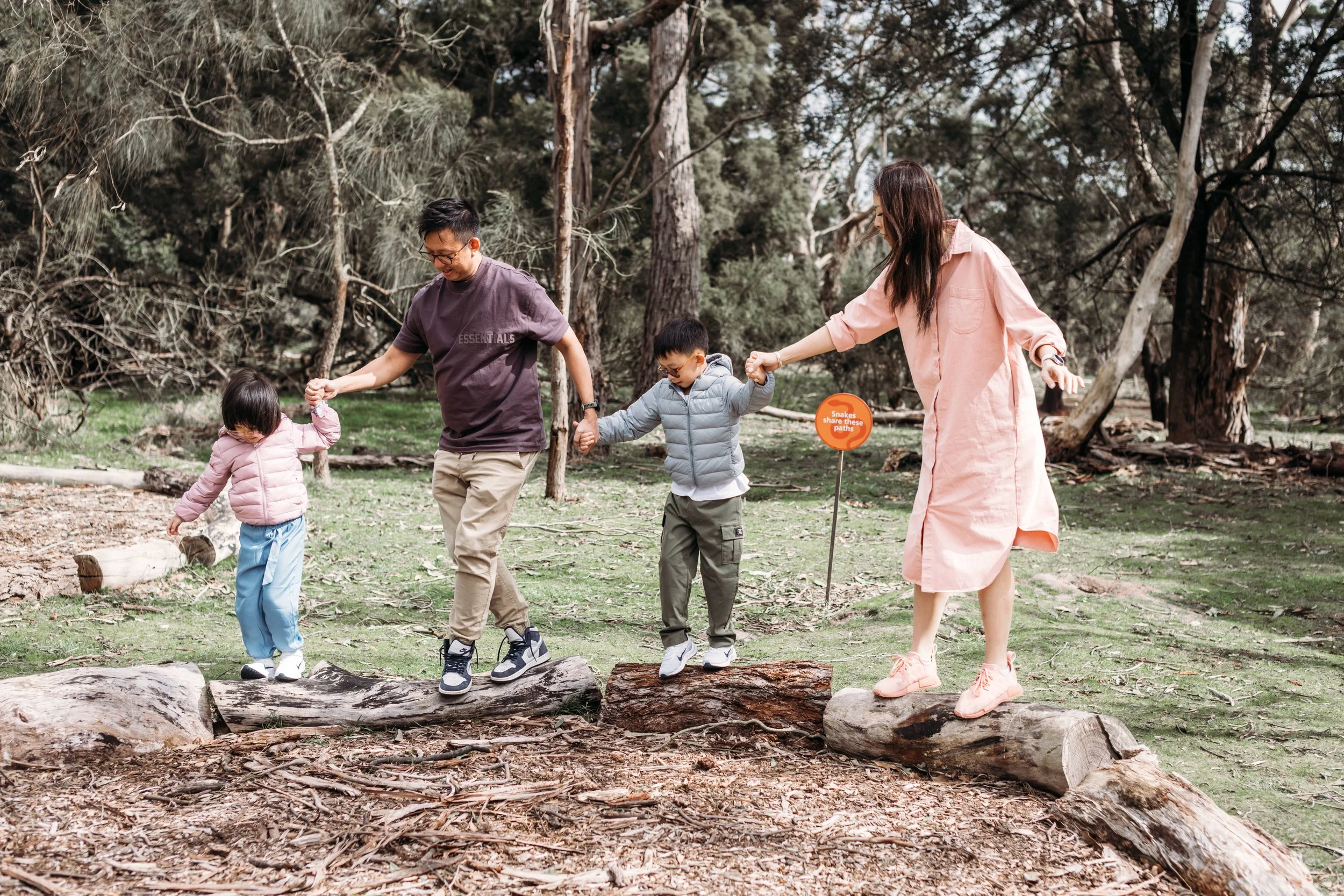
Something I've found particularly useful is giving children something to work towards. Sometimes it's an obvious goal, sometimes it's a little more subtle, but having a purpose can make an activity far more interesting than simply being asked to participate in a photograph.
A goal can also give children something that step-by-step instructions don't necessarily provide: a bigger picture. There's a starting point, something to work towards and a point where the activity is finished. They know what they're trying to achieve rather than waiting for the next instruction.
And there's something powerful about joint attention. When a child and the people around them are working towards something together, it becomes a collaboration. You get to see how they bring their siblings into an activity, ask their parents for help, contribute ideas or take the lead. There's a sense of purpose and pride that can come from working towards something together.
Create something on the spot. Find something to investigate. Do something adventurous. Ask them to tell you absolutely everything about their current hyper fixation and watch what happens when they realise somebody is genuinely interested.
Novelty, curiosity, excitement and a sense of achievement can all be useful ways of engaging children. The goal doesn't have to be complicated, and it certainly doesn't need to involve a reward chart or a carefully constructed activity. Sometimes it's simply giving a child something interesting to do, rather than asking them to do something because an adult has decided it's time for photographs.
4. Don't change your energy when they change direction
This is something I live by in ALL my shoots.
Sometimes an activity that seemed incredibly exciting five seconds ago is suddenly completely uninteresting. And when that happens, I think it's important not to change your own energy or become visibly disappointed.
Some children with ADHD can be incredibly aware of the reactions and expectations of the adults around them. If every change of direction is met with frustration, disappointment or an attempt to redirect them back to the original activity, the pressure can build pretty quickly.
Something else I've noticed is that some children can appear perfectly comfortable and engaged right up until they're suddenly overwhelmed. There isn't always an obvious gradual build-up. Sometimes they're fine, fine, fine, and then they're very much not fine. By that point, it can be difficult to turn things around.
That's why I think it's important to pay attention to the child's energy throughout the session, rather than waiting until they're visibly struggling. Sometimes changing activities, slowing things down or giving them space before they reach that point can make a big difference.
And if something gets abandoned after five seconds, that's fine. Be joyful. Find out what's interesting now.
It doesn't mean every idea is going to work, or that every moment is going to be easy. But being willing to roll with things makes a significant difference to how the experience feels.
5. Go on the adventure with them
Rather than spending the session trying to set up scenes or manufacture particular photographs, be prepared to move with what's happening.
Pace the child, rather than expecting them to keep up with you. If they're excited and moving quickly, be prepared to move quickly too. If they're completely absorbed in something, don't rush them along simply because you've got another photograph in mind.
Give warnings about transitions where that's helpful, particularly if you're moving away from an activity they've become deeply interested in. Sometimes simply moving yourself and creating an opportunity for them to follow works far better than asking them to stop what they're doing and come over.
And don't be afraid to abandon your own photographic plans. I've had plenty of success getting posed photographs of kids with ADHD, but sometimes you've got about two seconds to get the shot before they're ready for something else. That's fine. Take the photograph and move on. Nobody needs fifteen minutes of posing.
There's a difference between guiding an experience and trying to control it.
You have to be willing to roll with things, even when they bear absolutely no resemblance to whatever plan you started with.
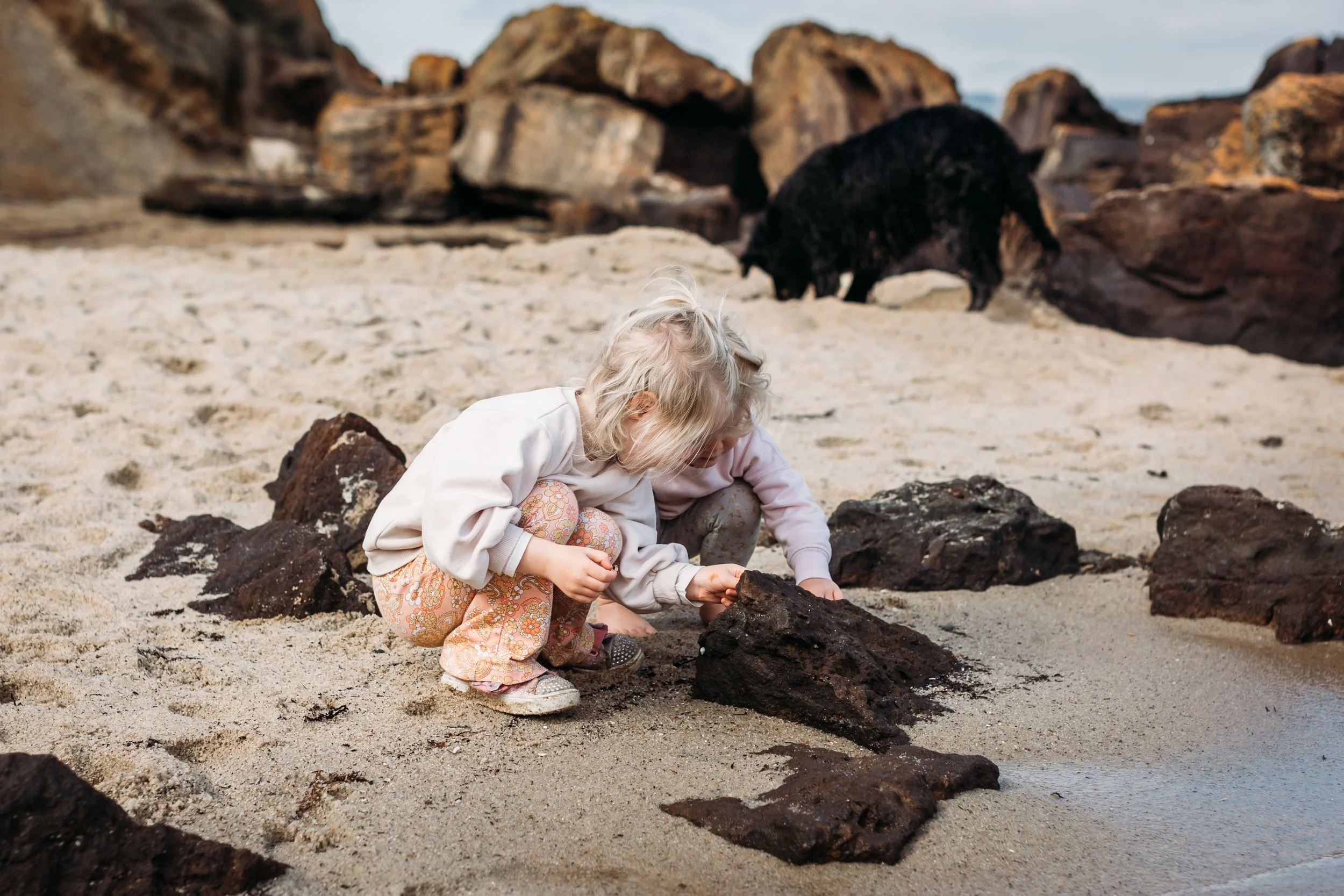
What does a successful family photoshoot actually look like?
There's nothing wrong with wanting a lovely photograph of the whole family together. And yes, you absolutely can get posed photographs of kids with ADHD.
But there isn't much point spending an entire session trying to manufacture a version of family life that doesn't actually exist.
ADHD can be hard. It's a disability, and it can make everyday family life incredibly challenging. But it's also part of who these kids are, and we don't want to squash that out of them for the sake of a photograph.
One of the things parents tell me most often when they receive their galleries is that I've captured their child exactly as they are. Not a tense version of themselves trying desperately to cooperate for the camera, but the kid they know and love.
And that's what I hope families see in their photographs. Their actual family, with all the challenges, personalities and sparkle that come with it. Photographs where they can look at their child and say, "Yep. That's exactly who they are."
Reference: Australasian ADHD Professionals Association (AADPA), Australian Evidence-Based Clinical Practice Guideline for ADHD: About ADHD.
The ADHD definition and recognised presentations are drawn from this guideline (not my brain). The photography advice and observations throughout the article are based on my professional and personal experience, rather than clinical recommendations (just to be clear, legends xx).